


To learn Spanish Spanish, meaning the Castilian variety spoken in Spain, start with pronunciation and the 500 most common words, add present-tense grammar, and practise a little every day with a tutor to correct your speech. Most beginners can hold simple conversations within months if they study consistently and speak aloud from the first week.
Castilian is not a different language from the Spanish heard in Latin America. It is the standard form from Spain, with a few distinctive sounds and everyday habits. This guide takes you from the first sounds to a sustainable study routine, with attention to the questions South African learners and others abroad commonly ask.
What does "Spanish Spanish" actually mean?
"Spanish Spanish" refers to the Spanish spoken in Spain, usually called Castilian (castellano). According to BBC Languages, the name is linked to the language's origins in Spain's Castile region, and Spanish is the official language of Spain as well as of many Central and South American countries that were once Spanish colonies.
In practice, all Spanish speakers share the same grammar, spelling and most of their vocabulary. The differences between regions are mostly about pronunciation, a handful of words and some pronoun choices.
A useful way to think about it: if you learn Castilian, you can be understood in Mexico, Argentina or Colombia, and you will understand them with a little adjustment. Choose Castilian if you plan to travel to Spain, study at a Spanish university, work with European clients or simply prefer its clear, crisp sound.
How does Castilian differ from Latin American Spanish?
Castilian differs from Latin American Spanish mainly in three areas: pronunciation, the use of vosotros, and a small set of vocabulary choices. These differences are real but modest, and none of them stops a beginner from communicating.
| Feature | Castilian (Spain) | Latin American Spanish |
|---|---|---|
| "c" before e/i, and "z" | Pronounced like English "th" (cerveza) | Pronounced like "s" |
| "You all" (informal) | Vosotros (vosotros habláis) | Ustedes (ustedes hablan) |
| Past events | Present perfect used often (he comido) | Simple past preferred (comí) |
| Computer | Ordenador | Computadora |
| Car | Coche | Carro or auto |
| Mobile phone | Móvil | Celular |
Do not worry about memorising every variation at the outset. Pick one model, Castilian in this case, and be consistent. You can adapt to other accents later through listening.
Why learn Castilian Spanish in 2026?
Spanish is one of the most widely spoken languages in the world, and demand keeps rising. A 2025 report summarised by The Diplomat in Spain says the number of Spanish learners grew by 1.5 to 2 per cent between 2024 and 2025.
The practical reasons for South African learners are varied:
- Travel: Spain is a major destination, and even basic Castilian transforms a trip.
- Career: Spanish supports roles in tourism, trade, translation, education and international business.
- Study and relocation: Many universities in Spain teach in Spanish, and residents often find daily life easier with the language.
- Personal connection: Spanish opens literature, film, music and friendships.
A clear reason matters because it shapes what you study first. A traveller needs restaurant and transport phrases. A professional needs formal email language. Decide which describes you before choosing materials.
How should a beginner start with pronunciation?
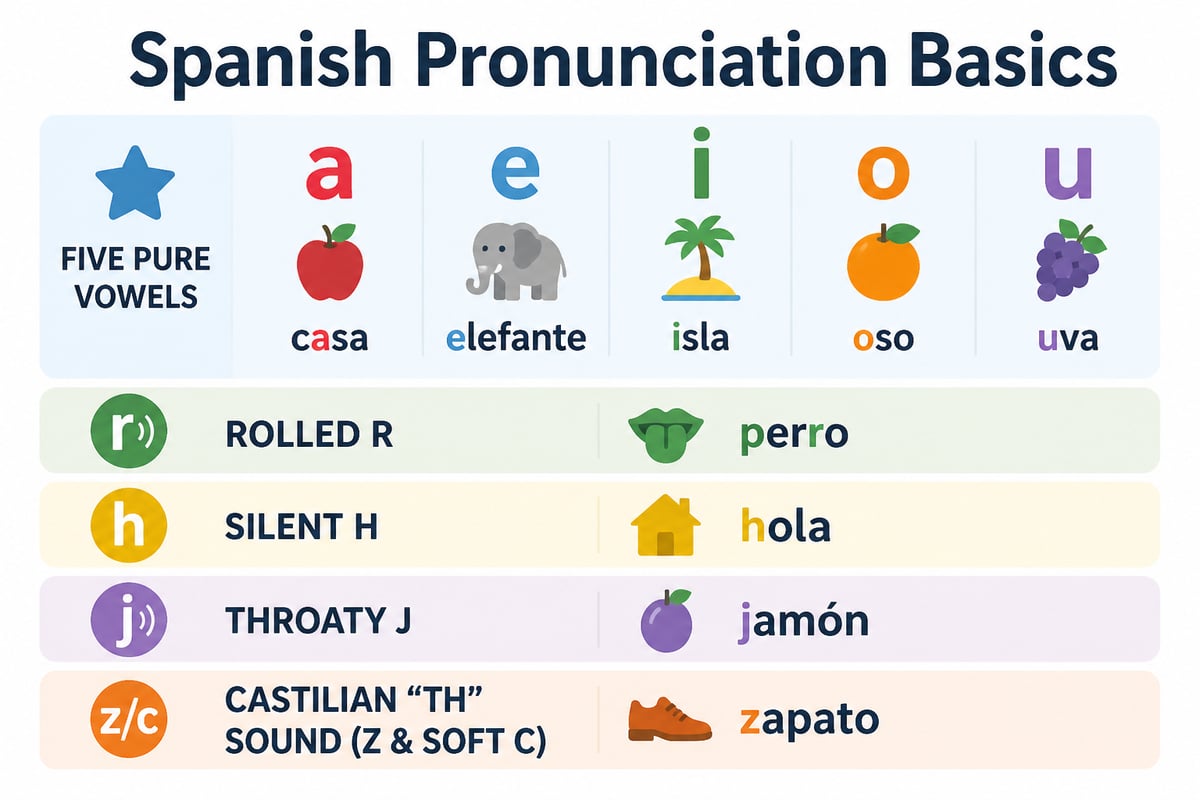
A beginner should start with pronunciation because Spanish is largely phonetic: once you know the sounds, you can read almost any word aloud correctly. This is a real advantage over English, and it pays off quickly.
Begin with the five vowels, which stay short and pure:
- a as in "father"
- e as in "bed"
- i as in "machine"
- o as in "more" (without the glide)
- u as in "rule"
Then learn the consonants that trip up English speakers:
- The rolled "r": perro (dog) and pero (but) are different words, so the roll matters.
- "j" and "g" before e/i: a throaty sound, like the "ch" in Afrikaans lag, which South African learners often find natural.
- "h": always silent (hola sounds like "ola").
- "ll" and "ñ": calle and mañana carry sounds with no direct English match.
- Castilian "z" and soft "c": the "th" sound mentioned earlier.
Spend the first week reading the alphabet aloud and recording yourself. Compare your recording with native audio, and repeat until the sounds feel automatic.
Which words and phrases should you learn first?
Learn the highest-frequency words and survival phrases first, because a small core vocabulary covers a large share of everyday speech. Aim for about 500 words in your first two months, grouped by situation rather than alphabetically.
Start with these categories:
- Greetings and courtesy: hola, buenos días, por favor, gracias, perdone (excuse me)
- Introductions: me llamo…, soy de Sudáfrica, mucho gusto
- Questions: ¿cuánto cuesta?, ¿dónde está…?, ¿hablas inglés?
- Numbers, days and time: one to a hundred, the weekdays, ¿qué hora es?
- Food and drink: una cerveza, la cuenta, por favor, soy vegetariano
Use flashcards with spaced repetition, and always learn a word inside a short sentence. Quiero un café con leche teaches more than the isolated word café.
What grammar do you need to understand first?
You need present-tense verbs, noun gender, basic sentence order and the difference between ser and estar before anything else. These four ideas support most beginner conversation.
Verbs and the present tense
Spanish verbs change their endings to show who is acting. Regular verbs fall into three groups: -ar (hablar), -er (comer) and -ir (vivir). Learn the present tense of each, then the common irregulars: ser, estar, tener, ir and hacer. In Castilian, include the vosotros form so you recognise it when you hear it in Spain.
Gender and agreement
Nouns are masculine or feminine, and adjectives match them: el libro rojo, la casa roja. Most words ending in -o are masculine and most ending in -a are feminine, though there are exceptions such as el día and la mano.
Ser and estar
Both mean "to be". Use ser for identity and lasting traits (soy sudafricano, ella es alta) and estar for location and temporary states (estoy en Madrid, estoy cansado).
Sentence order
Spanish often drops subject pronouns because the verb ending already shows who is acting. Hablo español is complete without yo. Questions use inverted punctuation: ¿Cómo estás?

How long does it take to learn Spanish?
Reaching basic conversation typically takes a few months of regular study, while comfortable fluency takes considerably longer and depends on hours practised. No honest timeline fits everyone, so treat any promise of fluency in weeks with caution. For a step-by-step plan with realistic milestones, see our guide on how to learn the Spanish language from zero.
For a sense of scale, the BBC’s online Spanish course is a beginner course covering the basics over 12 weeks. That is a reasonable benchmark for your first milestone: greetings, introductions, ordering food, asking directions and talking about yourself in the present tense.
Realistic stages look like this:
- Weeks 1 to 4: pronunciation, greetings, numbers and 100 core words.
- Months 2 to 3: present tense, simple questions and short exchanges.
- Months 4 to 6: past tenses, longer conversations and listening to slow native speech.
- Beyond six months: the subjunctive, natural speed and confident self-expression.
Consistency beats intensity. Thirty focused minutes daily outperforms a four-hour session once a week.
What is the best way to practise every day?
The best daily practice combines short, varied activities across listening, reading, writing and speaking. Balance matters because passive study alone leaves speaking weak.
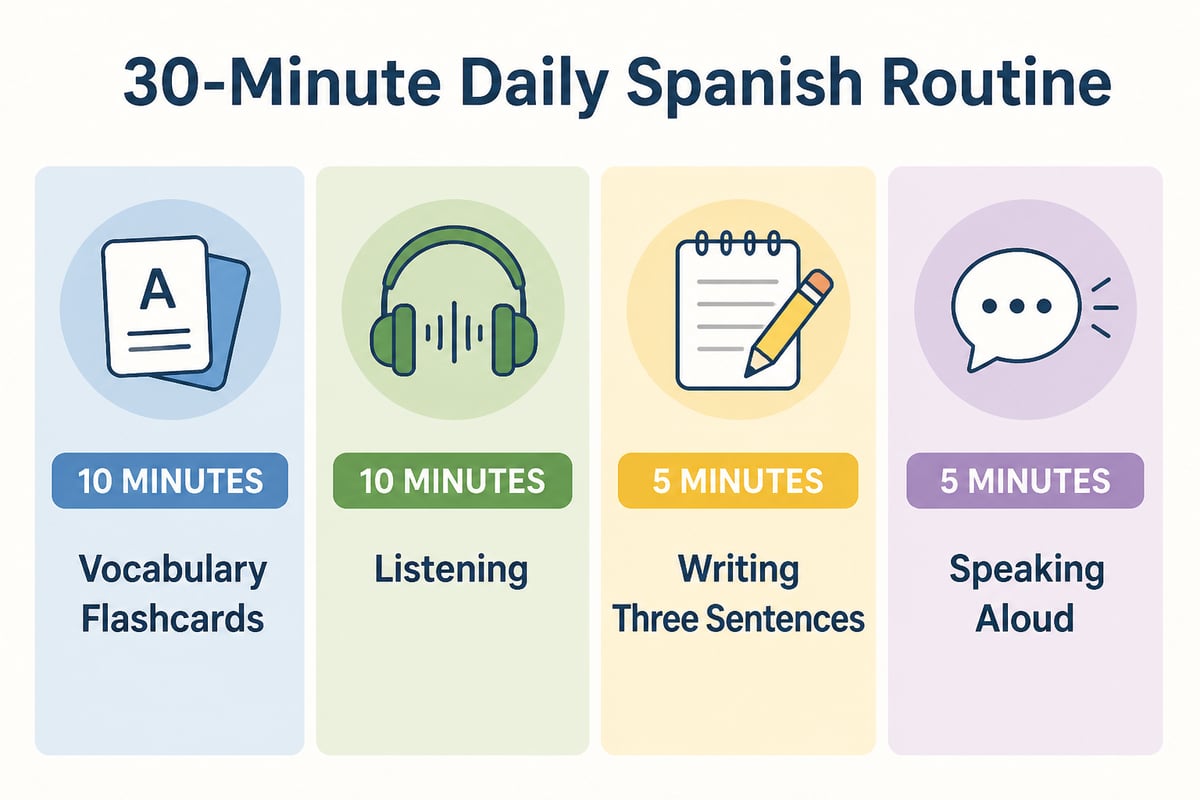
A simple 30-minute routine:
- 10 minutes of vocabulary review with spaced-repetition flashcards
- 10 minutes of listening, such as a Spanish podcast or a slow news broadcast from Spain
- 5 minutes of writing three sentences about your day
- 5 minutes of speaking aloud, narrating what you are doing
Add variety through Spanish-language films with subtitles, children's books and music. Spanish football commentary and cooking programmes are rich in everyday vocabulary and suit adult learners well.
Is self-study enough, or do you need a teacher?
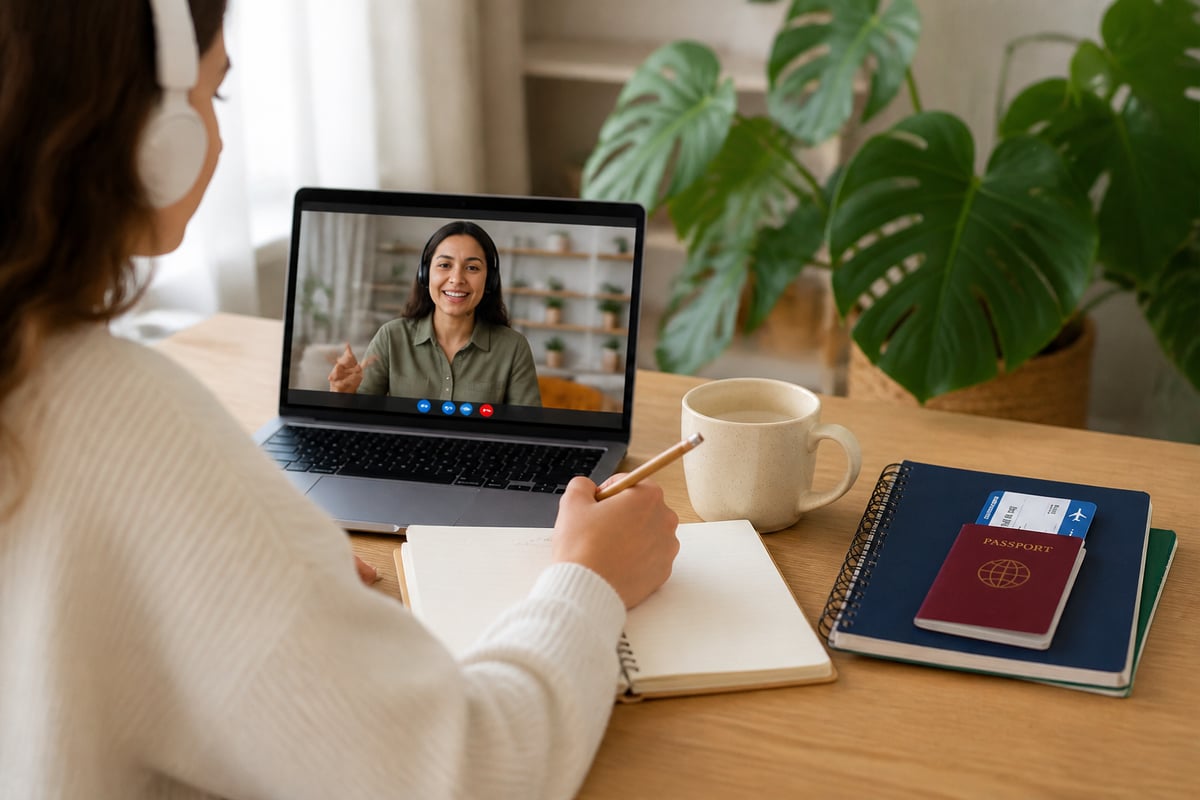
Self-study builds vocabulary and habits well, but a qualified teacher is the fastest way to correct pronunciation, fix grammar errors and gain speaking confidence. Apps cannot tell you that your rolled "r" is slipping or that you keep misusing estar.
A tutor also keeps you accountable and adapts the material to your goal. This is particularly useful for learners balancing work and family, because lessons can be scheduled around availability. Accreditation is worth checking too. If you want a recognised qualification, or you are a school learner whose language options depend on curriculum rules, choose a provider with proper registration.
For learners in South Africa and abroad, Mi Casa of Languages’ Spanish and Portuguese online language courses offer structured tuition for travellers, professionals, entrepreneurs, students, retirees and others who want practical skills for confident travel, relocation and career growth. Check the course pages or contact the school directly for current schedules, formats and fees.
What common mistakes should beginners avoid?
Beginners most often lose progress by skipping pronunciation, translating word for word from English and avoiding speaking. Each mistake is easy to prevent once you know it.
- Translating literally. "I am hungry" becomes tengo hambre (literally "I have hunger"), not soy hambre. Learn phrases as units.
- Ignoring gender. Learn la mesa and el problema together with their articles from the start.
- Waiting until you feel ready to speak. Fluency grows through imperfect speaking. Start in week one.
- Using too many resources at once. One course, one flashcard deck and one listening source is enough.
- Mixing Castilian and Latin American forms without noticing. Pick a model and stay with it until you are comfortable.
- Dropping the routine after a bad week. Resume the next day, even with ten minutes.
Mistakes are evidence of progress. Native speakers generally respond warmly to an honest attempt in their language.
How can you measure your progress?
You can measure progress by testing specific abilities at regular intervals rather than relying on a feeling of improvement. Concrete checkpoints keep motivation steady.
Every four weeks, try these tasks:
- Introduce yourself aloud for one minute without notes.
- Understand the gist of a short, slow audio clip.
- Write a paragraph about your week and have a tutor correct it.
- Hold a five-minute conversation about a familiar topic.
If a task feels impossible, revisit that skill for the next month. The Common European Framework (A1 to C2) provides a standard scale, and many courses use it to describe levels, so you can set a target such as A2 by mid-year.
Frequently asked questions
Is Castilian harder than Latin American Spanish?
No. The grammar is identical, and the main extra items are the vosotros form and the "th" sound for z and soft c. Most learners pick these up within weeks.
Can I use Castilian in Latin America?
Yes. You will be understood everywhere, and people often enjoy hearing the Spain variety. You may need to adjust a few words, such as coche to carro.
How many hours a week should a beginner study?
Three to five hours spread across the week, with some activity daily, gives steady progress. Shorter, frequent sessions work better than occasional long ones.
Do I need to travel to Spain to become fluent?
Travel helps, but it is not required. Online lessons, media and conversation practice with a tutor can build strong skills from home.
Today, record yourself reading the five Spanish vowels and the sentence Me llamo… y quiero aprender español, then book a short assessment lesson to hear how it sounds to a trained ear. If you want structured, flexible tuition from an accredited school, Spanish & Portuguese online Language courses at Mi Casa of Languages are designed around your availability and schedule, for learners across South Africa and worldwide. Get in touch to discuss which level suits you and begin learning Castilian with confidence.





Recent Comments