


Learning Spanish through personalised instruction has become increasingly popular as learners recognise the limitations of one-size-fits-all classroom approaches. A private tutor in Spanish offers targeted support that adapts to your unique learning style, schedule, and goals, whether you're preparing for relocation, advancing your career, or simply wanting to connect more deeply with Hispanic culture. The individualised attention, immediate feedback, and customised curriculum provided by expert tutors can dramatically accelerate your path to fluency whilst building genuine confidence in real-world communication.
Why Choose a Private Tutor in Spanish Over Traditional Classes
Traditional classroom environments often struggle to accommodate diverse learning paces and individual objectives. Whilst group classes follow a fixed syllabus, a private tutor in Spanish tailors every session to your specific needs, whether you're focusing on business vocabulary, conversational fluency, or exam preparation.
Personalised Learning Pathways
Every learner brings unique strengths, challenges, and motivations to language acquisition. Private tutoring recognises this diversity by:
- Diagnosing your current proficiency level across speaking, listening, reading, and writing skills
- Identifying specific gaps in grammar, vocabulary, or pronunciation that need attention
- Designing custom lesson plans aligned with your personal or professional goals
- Adjusting pace and difficulty based on your progress and comprehension
- Incorporating your interests into learning materials to maintain engagement
This adaptive approach ensures you're neither bored with material that's too simple nor overwhelmed by content beyond your current capabilities. Research into language teaching best practices emphasises the importance of providing effective feedback tailored to individual learner needs, something private tutors excel at delivering.

Flexible Scheduling Around Your Life
One of the most compelling advantages of working with a private tutor in Spanish is the flexibility to schedule sessions around your existing commitments. Unlike fixed classroom timetables, private tutoring accommodates:
- Early morning sessions before work
- Lunchtime lessons during breaks
- Evening classes after family commitments
- Weekend intensive sessions
- Irregular schedules for shift workers or travellers
This flexibility proves especially valuable for professionals, parents, and students juggling multiple responsibilities. Many accredited institutions now offer both in-person and online tutoring options, ensuring accessibility regardless of your location or circumstances.
Key Benefits of One-to-One Spanish Instruction
The concentrated attention you receive from a dedicated tutor creates learning conditions impossible to replicate in group settings. This individualised focus translates into measurable advantages across multiple dimensions of language acquisition.
Accelerated Progress Through Focused Attention
When you're the sole student in a lesson, every minute serves your learning objectives. Your private tutor in Spanish can:
- Address your questions immediately without waiting for class time
- Spend extra time on concepts you find challenging
- Skip quickly through material you've already mastered
- Provide immediate correction of pronunciation and grammar errors
- Engage you in continuous conversation practice
| Learning Aspect | Group Class | Private Tutoring |
|---|---|---|
| Speaking time per hour | 5-10 minutes | 40-50 minutes |
| Personalised feedback | Limited | Continuous |
| Curriculum flexibility | Fixed syllabus | Fully customised |
| Pace adjustment | Group average | Individual optimal |
| Question opportunities | Shared with 10-20+ | Unlimited |
This concentrated practice significantly reduces the time required to achieve specific proficiency milestones. Many learners report reaching conversational fluency in 6-8 months with consistent private tutoring, compared to 18-24 months in traditional classroom settings.
Building Genuine Confidence in Speaking
Language anxiety represents one of the most significant barriers to fluency. Speaking in front of classmates often triggers self-consciousness that inhibits natural communication. A private tutor in Spanish creates a safe, judgement-free environment where you can:
- Make mistakes without embarrassment
- Practice difficult pronunciations repeatedly
- Ask "basic" questions without feeling awkward
- Experiment with new vocabulary and structures
- Develop authentic conversational rhythm
This psychological safety accelerates the transition from theoretical knowledge to practical application, helping you think in Spanish rather than translating from English.
What to Look for in a Quality Spanish Tutor
Not all private tutors deliver the same quality of instruction. Understanding the hallmarks of effective teaching helps you select a tutor who will genuinely advance your language goals rather than simply provide pleasant but unproductive conversation practice.
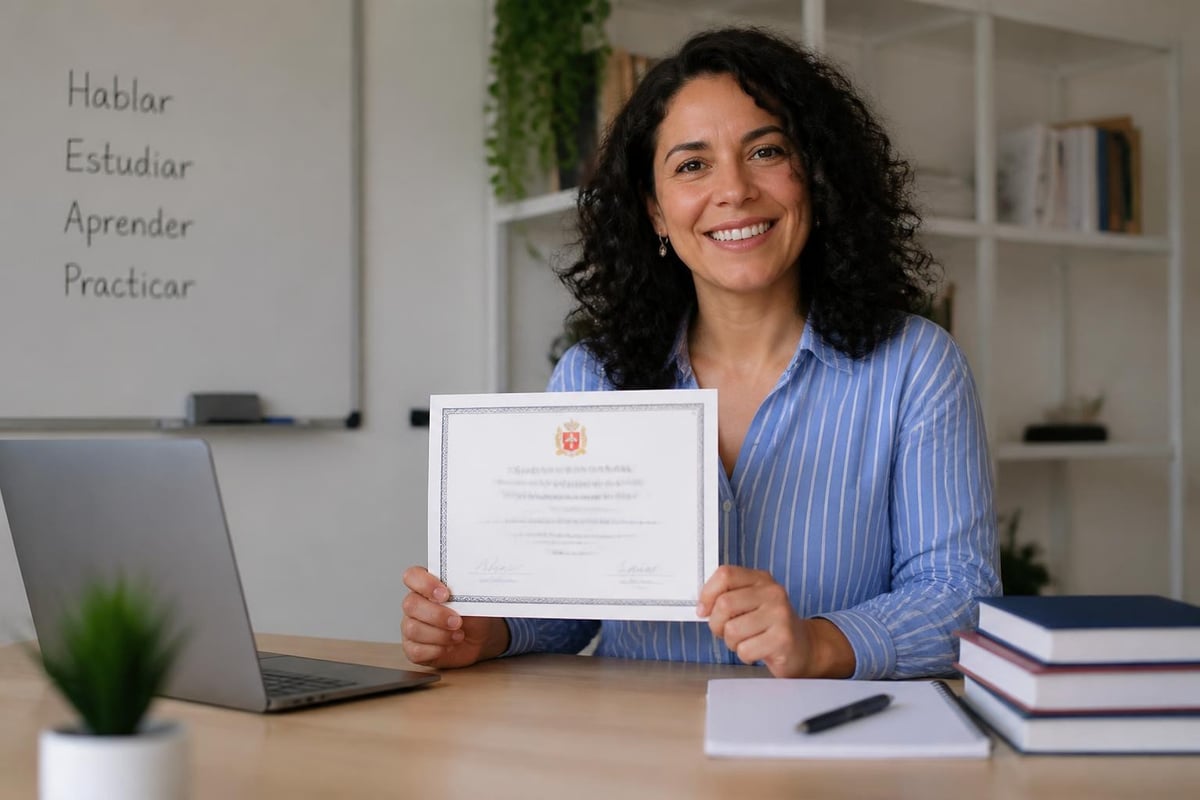
Professional Qualifications and Accreditation
Reputable language instruction requires more than native fluency. Look for tutors who possess:
- Recognised teaching qualifications in Spanish as a foreign language (ELE/DELE certification)
- Formal linguistic training in grammar, phonetics, and language acquisition theory
- Accreditation from educational authorities ensuring quality standards
- University partnerships indicating professional credibility
- Proven track record with documented student success rates
Mi Casa of Languages maintains the highest standards by being the only accredited Spanish language school registered with the Department of Education, ensuring every tutor meets rigorous professional criteria. Their 100% success rate reflects this commitment to qualified instruction.
Teaching Methodology and Materials
Effective private tutors employ structured methodologies rather than improvised lessons. Quality instruction incorporates:
- Communicative approach prioritising practical usage over rote memorisation
- Integrated skills development balancing speaking, listening, reading, and writing
- Cultural context connecting language to real-world Hispanic societies
- Progressive complexity building systematically from foundations to advanced concepts
- Regular assessment tracking progress and adjusting instruction accordingly
Ask potential tutors about their teaching philosophy, typical lesson structure, and the materials they use. Professional tutors should articulate clear pedagogical principles and demonstrate organised curriculum planning.
Cultural Competence and Real-World Application
Language learning extends far beyond vocabulary and grammar rules. Your private tutor in Spanish should facilitate cultural understanding by:
- Explaining regional variations between Spanish-speaking countries
- Teaching appropriate social conventions and communication styles
- Incorporating authentic materials like news articles, podcasts, and films
- Sharing insights about daily life, business culture, and social norms
- Preparing you for real situations you'll encounter in Spanish-speaking environments
This cultural dimension transforms language study from academic exercise into practical preparation for genuine cross-cultural engagement.
Online Versus In-Person Spanish Tutoring
Technological advances have expanded tutoring options beyond traditional face-to-face sessions. Understanding the strengths and limitations of each format helps you choose the approach that best serves your learning preferences and circumstances.
Advantages of Online Tutoring Sessions
Digital platforms have revolutionised access to quality language instruction. Research into virtual exchange and language learning demonstrates that online tutoring can be equally effective as in-person instruction when properly structured. Online sessions offer:
- Geographic flexibility connecting you with tutors worldwide
- Elimination of travel time adding convenience to busy schedules
- Digital resources easily shared through screen-sharing and cloud platforms
- Recording capabilities allowing you to review sessions for reinforcement
- Cost savings on venue expenses often reflected in more affordable rates
For learners in areas without local Spanish tutors or those with unpredictable schedules, online instruction provides accessibility that would otherwise be impossible. Spanish and Portuguese online language courses enable learners across South Africa and internationally to access world-class instruction regardless of location.

When In-Person Tutoring Offers Advantages
Despite the convenience of digital learning, some scenarios benefit from physical presence:
- Very young learners who struggle with screen-based attention
- Absolute beginners needing extensive pronunciation coaching
- Learners preferring tangible materials and hands-on activities
- Those with unreliable internet connectivity
- Students who find in-person interaction more engaging
| Factor | Online Tutoring | In-Person Tutoring |
|---|---|---|
| Convenience | High (no travel) | Lower (travel required) |
| Geographic access | Unlimited | Limited to local area |
| Scheduling flexibility | Maximum | Dependent on venue |
| Technology requirements | Internet, device, platform | Minimal |
| Personal connection | Good with quality video | Naturally stronger |
| Cost | Often lower | Often higher |
The optimal choice depends on your personal learning style, technical comfort, location, and specific objectives.
Structuring Effective Private Spanish Lessons
The format and content of your tutoring sessions significantly impact learning outcomes. Understanding how professional tutors structure lessons helps you maximise the value of each session and accelerate your progress.
Typical Lesson Components
Well-designed private tutoring sessions balance multiple learning activities within each meeting. A standard one-hour lesson with a private tutor in Spanish typically includes:
- Warm-up conversation (5-10 minutes) reviewing previous material and discussing current events
- Grammar or vocabulary focus (15-20 minutes) introducing new concepts with clear explanations
- Guided practice (15-20 minutes) applying new knowledge through structured exercises
- Free conversation (10-15 minutes) using learned material in spontaneous communication
- Review and homework assignment (5 minutes) consolidating learning and setting practice tasks
This balanced approach ensures you receive both explicit instruction in language structures and ample opportunity for practical application.
Frequency and Duration Recommendations
Consistency matters more than intensity when building language skills. Most language acquisition specialists recommend:
- Minimum frequency: Two sessions weekly to maintain momentum
- Optimal frequency: Three to four sessions weekly for rapid progress
- Session length: 60-90 minutes per session for focused adults
- Total weekly exposure: 4-6 hours of formal instruction plus self-study
Spreading practice across multiple shorter sessions proves more effective than infrequent marathon sessions, as regular exposure strengthens neural pathways and prevents forgetting between lessons.
Setting Clear Goals With Your Spanish Tutor
Productive tutoring relationships begin with explicit, measurable objectives. Articulating your motivations and desired outcomes enables your tutor to design instruction that delivers tangible results aligned with your priorities.
Common Learning Objectives
Your private tutor in Spanish should help you define specific goals such as:
- Travel preparation: Conversational skills for navigating Spanish-speaking countries confidently
- Professional advancement: Business Spanish vocabulary and formal communication protocols
- Academic requirements: University course prerequisites or research capabilities
- Family connections: Communicating with Spanish-speaking relatives or partners
- Cultural enrichment: Accessing literature, film, and music in original language
- Relocation readiness: Comprehensive fluency for living and working abroad
Each objective requires different emphases in vocabulary, formality levels, and skill priorities. A tutor preparing you for business negotiations will focus differently than one helping you converse with family.
Measuring Progress and Adjusting Approach
Professional tutors implement regular assessment to track advancement and refine instruction. Expect your tutor to:
- Conduct periodic proficiency evaluations using standardised frameworks
- Provide written feedback on strengths and areas needing development
- Celebrate milestones as you reach new capability levels
- Adjust teaching methods if progress plateaus
- Recommend supplementary resources for independent study
This data-driven approach ensures you're genuinely advancing rather than simply attending sessions without measurable improvement.
Privacy and Professional Standards in Private Tutoring
Quality language instruction operates within established professional and ethical frameworks. Understanding these standards helps you select reputable tutors and ensure appropriate practices throughout your learning journey.
Data Protection and Student Privacy
Tutors handling student information must comply with privacy regulations protecting personal data. Guidance on data protection in educational settings outlines key principles that apply to private tutoring:
- Secure storage of contact details and progress records
- Clear consent for any recording of lessons
- Confidentiality regarding learning challenges or personal information shared during lessons
- Appropriate use of online platforms with privacy protections
- Transparent policies about data retention and usage
Reputable tutoring organisations maintain formal privacy policies and use secure systems for scheduling, payment, and communication.
Professional Boundaries and Ethics
Professional tutors maintain appropriate relationships focused solely on educational outcomes. Expect:
- Clear contractual terms regarding fees, cancellations, and expectations
- Consistent session times and reliable attendance
- Professional communication in all interactions
- Respect for cultural differences and learning challenges
- Honest assessment of progress without false praise or discouragement
Understanding how private tutoring should operate within regulated frameworks helps ensure you receive ethical, high-quality instruction that serves your genuine educational interests.
Maximising Value From Your Spanish Tutoring Investment
Private instruction represents a significant investment of time and resources. Implementing strategies to optimise each session ensures you extract maximum value and accelerate your return on investment.
Preparation and Active Participation
Successful language learners approach each session as active participants rather than passive recipients. Maximise your learning by:
- Completing assigned homework to reinforce previous lessons
- Preparing questions about concepts you found confusing
- Reviewing previous material before each session
- Bringing relevant materials related to your learning goals
- Taking notes during explanations for later review
Your engagement level directly correlates with progress speed. Tutors can guide and instruct, but genuine acquisition requires your active mental effort.
Supplementing Tutoring With Independent Practice
Private lessons form the foundation of structured learning, but daily practice between sessions consolidates knowledge. Effective supplementary activities include:
- Listening to Spanish podcasts during commutes
- Watching films or series with Spanish audio and subtitles
- Reading Spanish news websites or books at appropriate levels
- Using language apps for vocabulary drilling and grammar practice
- Joining conversation exchange groups for additional speaking practice
- Keeping a daily journal in Spanish to practice writing
| Practice Activity | Skills Developed | Recommended Frequency |
|---|---|---|
| Podcast listening | Comprehension, vocabulary | Daily (15-30 min) |
| Reading news/books | Vocabulary, grammar patterns | Daily (20-30 min) |
| Vocabulary apps | Word retention, spelling | Daily (10-15 min) |
| Conversation exchange | Speaking fluency, confidence | 2-3× weekly |
| Journal writing | Grammar application, composition | 3-5× weekly |
This consistent exposure outside formal lessons dramatically accelerates overall proficiency development.
Cost Considerations and Finding Affordable Quality
Budget constraints influence educational decisions, but effective Spanish tutoring needn't be prohibitively expensive. Understanding pricing factors and value indicators helps you secure quality instruction within your financial parameters.
Factors Affecting Tutoring Costs
Private tutor in Spanish rates vary based on several considerations:
- Tutor qualifications: Advanced degrees and specialised certifications command premium rates
- Experience level: Seasoned professionals typically charge more than newer tutors
- Session format: Online lessons often cost less than in-person due to reduced overhead
- Lesson frequency: Package deals for multiple sessions usually offer per-session discounts
- Geographic location: Urban areas and high-demand regions see higher rates
- Specialisation: Business Spanish or exam preparation may cost more than general conversation
Hourly rates for qualified Spanish tutors typically range from £25-£60, with highly specialised instruction reaching £80+ per hour. However, institutional programmes often provide better value than individual freelance tutors.
Assessing Value Beyond Price
The cheapest option rarely delivers the best educational outcomes. Evaluate potential tutors based on:
- Credentials and professional development
- Structured curriculum rather than improvised lessons
- Track record of student success
- Materials and resources provided
- Availability and flexibility
- Institutional backing and accountability
Schools registered with educational authorities and affiliated with universities demonstrate commitment to quality standards. The modest price difference between a qualified, accountable tutor and an unqualified conversation partner represents exceptional value when you consider the efficiency gains and guaranteed progress.
Special Considerations for Different Learner Types
Learning needs vary significantly across age groups, proficiency levels, and objectives. Understanding how private tutoring adapts to different learner profiles helps you find instruction optimised for your specific situation.
Children and Adolescent Learners
Young learners benefit from private tutoring that:
- Incorporates games, songs, and interactive activities maintaining engagement
- Builds on school curricula for students taking Spanish as an academic subject
- Uses shorter, more frequent sessions matching attention spans
- Involves parents in progress monitoring and practice support
- Balances fun with systematic skill development
Parents should verify tutors working with minors maintain appropriate safeguarding policies and, when relevant, understand student privacy protections applicable to educational records.
Adult Professional Learners
Working professionals pursuing Spanish for career advancement need tutoring that:
- Focuses intensively on business vocabulary and formal registers
- Schedules flexibly around demanding work commitments
- Emphasises practical communication for specific industries
- Provides rapid skill development through concentrated instruction
- Prepares for specific events like presentations, negotiations, or relocations
These learners typically prefer goal-oriented instruction with measurable progress markers and minimal time wastage on tangential topics.
Retirement and Lifestyle Learners
Mature learners studying Spanish for travel, cultural enrichment, or cognitive stimulation benefit from approaches that:
- Progress at comfortable pace without pressure
- Emphasise conversational fluency over academic grammar
- Connect language to cultural interests like cuisine, history, or literature
- Build social connections through group activities when desired
- Celebrate learning for its intrinsic rewards
This demographic often has more scheduling flexibility and may prefer a mix of private and small-group instruction for social variety.
The Growing Importance of Spanish in Global Context
Understanding why Spanish proficiency matters increasingly in 2026 helps maintain motivation and appreciate the value of your tutoring investment. Spanish ranks among the world's most strategically valuable languages.
Spanish as a Global Communication Tool
With over 500 million speakers worldwide, Spanish serves as:
- The official language in 21 countries across Europe, the Americas, Africa, and Oceania
- The second most spoken native language globally after Mandarin Chinese
- A critical business language for trade with Latin American markets
- An increasingly important language in United States contexts
- A gateway to rich cultural traditions in literature, film, music, and art
This global reach means Spanish skills open doors professionally, culturally, and personally across multiple continents.
Career Advantages of Spanish Fluency
Employers increasingly value multilingual capabilities. Spanish proficiency enhances careers in:
- International business and trade
- Healthcare serving diverse populations
- Education and language instruction
- Tourism and hospitality industries
- Diplomatic and international development work
- Translation and interpretation services
The expansion of private tutoring globally reflects recognition that language skills represent competitive advantages in interconnected economies.
Finding the right private tutor in Spanish transforms language learning from a frustrating struggle into an engaging journey towards fluency and cultural connection. Whether you're preparing for travel, advancing your career, or enriching your personal life, personalised instruction adapted to your unique goals delivers results that generic classroom approaches simply cannot match. Mi Casa of Languages offers accredited, professional Spanish instruction with proven success, flexible scheduling, and worldwide accessibility, ensuring you receive the expert guidance needed to achieve your language ambitions efficiently and affordably.





Recent Comments