



Learning Spanish opens doors to over 500 million speakers worldwide and transforms opportunities in business, travel, and personal relationships. Yet the sheer volume of apps, courses, textbooks, and conflicting advice can leave aspiring learners paralysed with indecision. The best way to study Spanish isn't a single method but rather a strategic combination of evidence-based techniques tailored to your goals, schedule, and learning style. This guide synthesises the latest research with practical strategies that accelerate fluency whilst building lasting competence in the world's second most-spoken native language.
Understanding How Spanish Learning Actually Works
Before diving into techniques, it's essential to understand what drives successful language acquisition. Research shows that effective Spanish learning combines comprehensible input (material slightly above your current level), regular output practice, and metacognitive awareness of your own learning process.
The ACTFL research briefs and resources highlight that proficiency develops through stages, from novice recognition to advanced discourse competence. Most learners plateau not because of inadequate talent but because they abandon proven strategies too early or jump between methods without giving any approach sufficient time to work.
The Role of Self-Regulated Learning
A systematic meta-analysis of self-regulated learning interventions demonstrates that learners who actively plan, monitor, and reflect on their study habits achieve significantly better outcomes. This means the best way to study Spanish involves:
- Setting specific, measurable goals (e.g., "hold a 10-minute conversation about daily routines" rather than "get better at Spanish")
- Tracking progress through journals, recordings, or regular self-assessments
- Adjusting strategies based on what's working and what isn't
- Building self-efficacy by celebrating small wins and viewing mistakes as data

Foundational Strategies: Building Your Spanish Core
Structured Grammar Study in Context
Whilst communicative approaches dominate modern language teaching, structured grammar instruction remains valuable when integrated with meaningful context. The best way to study Spanish grammar combines explicit explanation with immediate application.
Rather than memorising conjugation tables in isolation, encounter verb forms within sentences you'll actually use. For instance, learn the preterite tense whilst narrating yesterday's activities, not as abstract paradigms. This contextualised approach strengthens both accuracy and recall.
| Grammar Approach | Effectiveness | Time Investment | Best For |
|---|---|---|---|
| Deductive (rule-then-examples) | Moderate | Low | Analytical learners, quick reference |
| Inductive (examples-then-rule) | High | Moderate | Pattern recognition, long-term retention |
| Contextualised (grammar in authentic texts) | Very High | High | Intermediate+ learners, practical application |
Vocabulary Acquisition Through Multiple Modalities
A comprehensive review on multimedia approaches to vocabulary learning confirms that combining definitions, contextual examples, visual aids, and sentence-writing exercises produces superior retention compared to single-method approaches.
Implement these evidence-based vocabulary strategies:
- Encounter new words in context before looking up isolated definitions
- Create personal example sentences that relate to your life and interests
- Space repetitions using systems like Anki or paper flashcards with increasing intervals
- Group thematically around topics (food, business, travel) rather than alphabetically
- Learn collocations (word partnerships like "tomar una decisión" rather than isolated words)
The most successful learners build vocabulary networks, connecting new words to previously learned items through semantic relationships, synonyms, antonyms, and usage contexts.
Immersive Input: The Cornerstone of Spanish Fluency
Leveraging Comprehensible Input at Scale
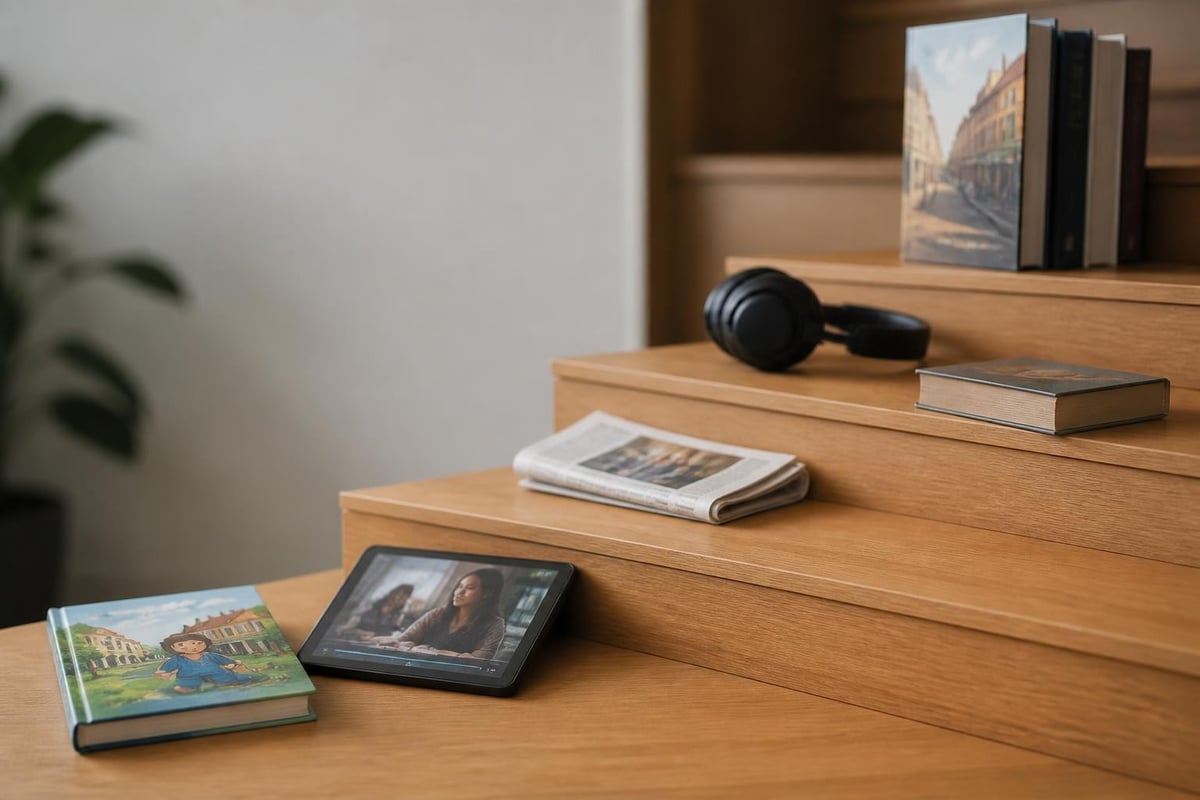
Research consistently demonstrates that massive exposure to understandable Spanish accelerates acquisition more than any other single factor. The challenge lies in finding material at the right difficulty level-approximately 95% comprehension with 5% new elements.
Beginner strategies (A1-A2):
- Graded readers with 300-500 unique words
- Children's programmes with visual context
- Slow-news podcasts designed for learners
- YouTube channels with Spanish subtitles at 0.75x speed
Intermediate strategies (B1-B2):
- Young adult novels in Spanish
- Netflix series with Spanish audio and Spanish subtitles (not English)
- News articles from simplified sources before tackling El País or BBC Mundo
- Podcasts on familiar topics where you already know the content
Advanced strategies (C1-C2):
- Literary fiction, essays, and opinion pieces
- Unmodified podcasts and radio programmes
- Academic lectures and documentary series
- Professional publications in your field
Data-Driven Learning with Authentic Texts
The systematic review on corpus-driven learning reveals how authentic language databases help learners discover natural patterns and collocations. Tools like SpanishDict's examples or the Corpus del Español allow you to see how native speakers actually use words in context.
Rather than wondering if "hacer una pregunta" or "preguntar una pregunta" is correct, search the corpus and observe that native speakers overwhelmingly use hacer. This evidence-based discovery accelerates intuitive understanding of Spanish beyond what grammar books alone provide.
Output Practice: Speaking and Writing Your Way to Competence
Structured Speaking Practice
Many learners delay speaking until they "feel ready," but research shows that early output-even imperfect-accelerates overall proficiency. The best way to study Spanish includes speaking from day one, with appropriate scaffolding.
Solo practice techniques:
- Describe your surroundings aloud for 5 minutes daily
- Record yourself explaining a concept, then transcribe and correct
- Shadow native speakers (repeat immediately after hearing)
- Use voice messages to a study partner rather than text
Interactive practice approaches:
- Weekly conversation exchanges with native speakers
- Structured tutoring sessions focusing on specific skills
- Group classes that mandate turn-taking protocols
- Role-play scenarios relevant to your goals (job interviews, restaurant orders, negotiations)
Writing for Feedback and Reflection
Written output allows for revision and reflection impossible in real-time conversation. Maintain a Spanish journal, participate in online forums, or compose weekly essays on topics of interest. The key is obtaining feedback-either from tutors, exchange partners, or AI tools-and systematically addressing recurring errors.
| Speaking vs Writing Practice | Speaking | Writing |
|---|---|---|
| Speed of feedback | Immediate | Delayed |
| Complexity possible | Limited by processing speed | Higher syntactic complexity |
| Revision opportunity | None | Unlimited |
| Authenticity | High | Medium |
| Ideal frequency | Daily, 15-30 min | 3-4x weekly, 20-45 min |
Psychological Factors: Motivation and Enjoyment
The Critical Role of Enjoyment in Persistence
A systematic review on enjoyment in foreign-language learning establishes that positive emotional experiences during study predict long-term persistence and superior outcomes. Learners who genuinely enjoy their study activities practise more frequently, experiment more willingly, and recover faster from setbacks.
Design your Spanish study routine around activities you find intrinsically rewarding:
- If you love cooking, follow Spanish recipe videos and food blogs
- If you're interested in politics, engage with Spanish-language political podcasts
- If you enjoy gaming, change your game interface to Spanish
- If you're passionate about fitness, follow Spanish-speaking trainers on social media
The best way to study Spanish is the way that keeps you coming back consistently over months and years, not the theoretically optimal method you'll abandon after three weeks.
Building a Sustainable Study Routine
Consistency trumps intensity. Research across skill domains confirms that daily 20-minute sessions outperform weekly 3-hour cramming sessions. Design your routine around these principles:
- Anchor study to existing habits (morning coffee, commute, pre-bed routine)
- Start absurdly small (5 minutes daily) and build gradually
- Use implementation intentions ("After breakfast, I will review 10 flashcards")
- Track streaks to build momentum and accountability
- Plan recovery from missed days without self-criticism
Structured Courses vs Self-Study: Finding the Right Balance
When Professional Instruction Accelerates Learning
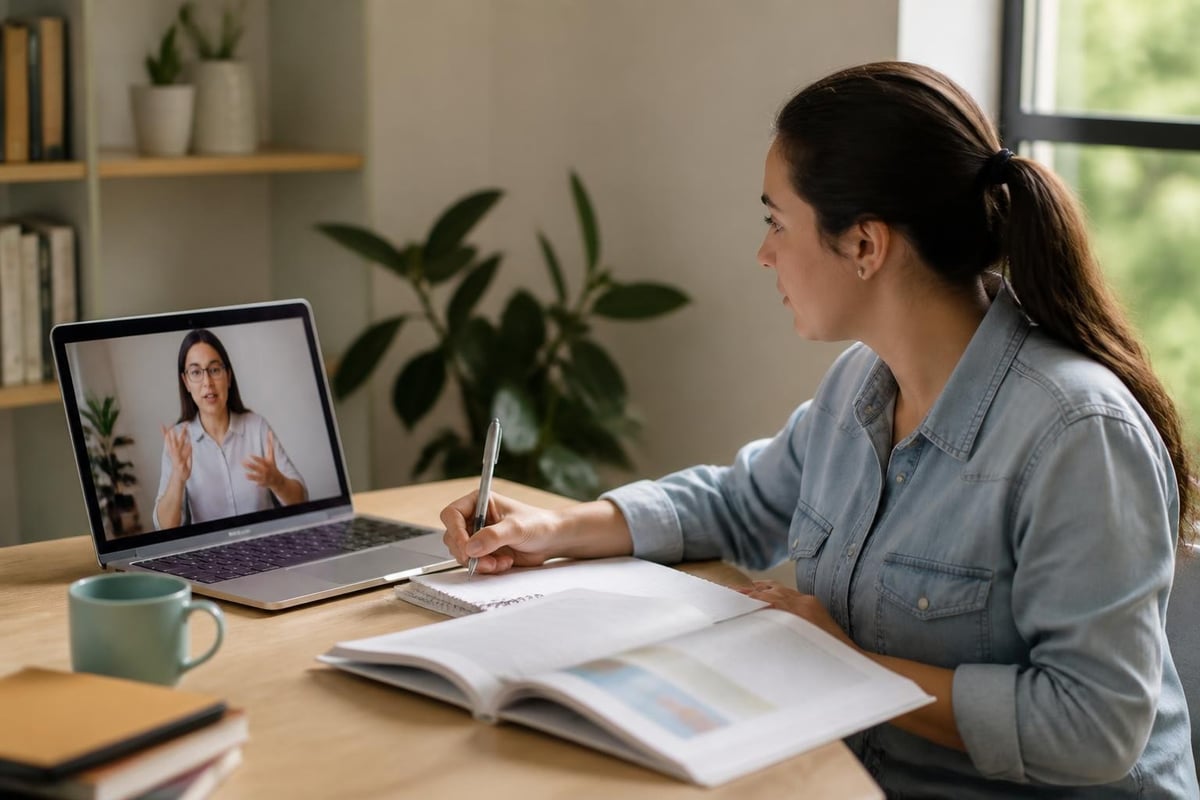
Whilst self-study resources have never been more abundant, structured instruction from qualified teachers provides irreplaceable benefits. Professional courses offer systematic progression, immediate error correction, accountability, and personalised feedback that apps and textbooks cannot replicate.
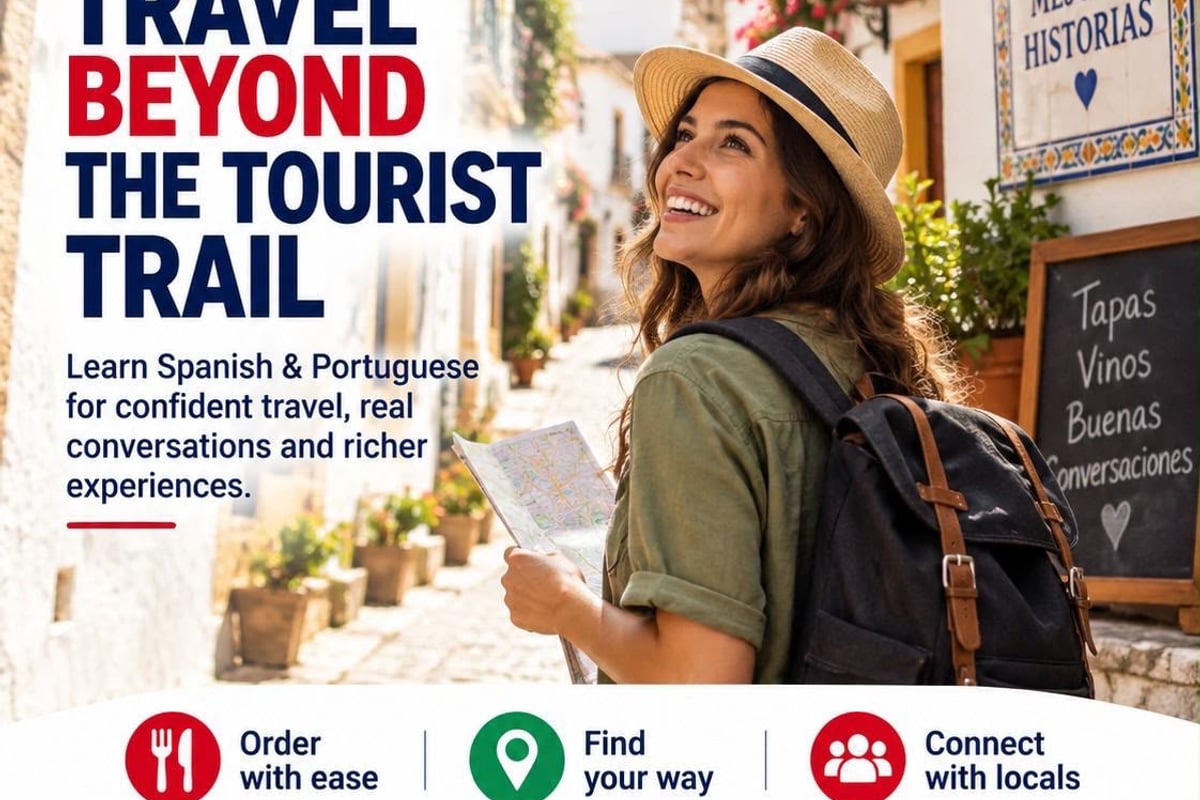
Mi Casa of Languages delivers accredited instruction that combines linguistic expertise with proven pedagogical methods, ensuring learners build competence efficiently whilst avoiding fossilised errors that plague unsupervised study. Spanish & Portuguese online Language courses provide the structure and accountability that transform sporadic effort into measurable progress, with flexible scheduling that adapts to your commitments whether you're in South Africa or anywhere worldwide.
Complementing Formal Study with Independent Practice
The most effective learners combine structured courses with independent immersion. Attend classes or work with tutors for explicit instruction, feedback, and structured conversation practice, then supplement with extensive reading, media consumption, and vocabulary review between sessions.
This hybrid approach addresses both declarative knowledge (rules, patterns, vocabulary) and procedural fluency (automatic production, comprehension at natural speed). Think of courses as providing the roadmap and checkpoints whilst self-study provides the daily mileage that builds endurance.
Technology-Enhanced Learning: Tools That Actually Work
Strategic Use of Language Apps
Apps like Duolingo, Babbel, and Busuu provide convenient entry points but function best as supplements rather than complete solutions. Use apps for:
- Daily review during otherwise wasted time (queues, commutes, waiting rooms)
- Vocabulary introduction before deeper study
- Gamified motivation when willpower is low
- Maintaining streaks during travel or disruption
Avoid treating apps as comprehensive curricula. They excel at bite-sized practice but rarely develop deep conversational competence or cultural understanding alone.
Artificial Intelligence as Study Partner
AI tools in 2026 offer unprecedented opportunities for Spanish learners. Large language models can:
- Generate personalised reading passages at your exact level
- Provide instant feedback on written compositions
- Simulate conversations on any topic
- Explain grammatical concepts with unlimited patience
- Create customised vocabulary lists for your specific interests
However, AI cannot replace human interaction, cultural nuance, or the accountability of structured learning environments. Use AI strategically as a practice partner and resource, not as a substitute for authentic communication.
Cultural Immersion Without Leaving Home
Building Cultural Competence Alongside Language Skills
True fluency extends beyond grammar and vocabulary to encompass cultural understanding, pragmatic appropriateness, and regional variation awareness. The best way to study Spanish includes regular exposure to diverse Spanish-speaking cultures.
Daily cultural immersion practices:
- Follow social media accounts from Spanish-speaking countries in your areas of interest
- Watch films and series from Spain, Mexico, Argentina, Colombia, and other regions
- Listen to music across genres (reggaeton, flamenco, rock en español, bachata)
- Read news from multiple Spanish-speaking perspectives
- Join online communities of Spanish speakers discussing shared interests
Cultural competence prevents embarrassing errors (like using coger in Mexico versus Spain) and enriches communication with appropriate expressions, humour references, and pragmatic strategies.
Understanding Regional Variation
Spanish varies significantly across regions. Decide whether you need:
- Peninsular Spanish (Spain): distinción between c/z and s, vosotros forms, particular vocabulary
- Latin American Spanish: seseo (no distinction), ustedes instead of vosotros, regional variations
- Specific regional varieties: Mexican, Argentine (with voseo), Colombian, Caribbean, etc.
For most learners, starting with a general Latin American or Peninsular base and gradually expanding recognition of variants provides the most practical foundation. Authentic media exposure naturally builds receptive competence across dialects even whilst maintaining productive consistency in your own speech.
Measuring Progress and Maintaining Motivation
Setting Meaningful Milestones
Track progress through concrete achievements rather than abstract feelings of improvement:
- Can-do statements: "I can order meals with modifications," "I can summarise news articles," "I can participate in casual workplace conversations"
- Quantified metrics: Books read, podcast hours consumed, conversation minutes logged
- Real-world accomplishments: Successful business call in Spanish, friendship with native speaker, travel interaction without English
- Formal assessments: DELE, SIELE, or institutional exams at appropriate intervals
Regular self-assessment using ACTFL proficiency guidelines helps identify specific areas needing attention and provides motivation through documented improvement.
Overcoming Plateaus and Maintaining Momentum
Every Spanish learner encounters periods where progress feels imperceptible. Plateaus typically indicate consolidation phases where the brain integrates previously learned material rather than stagnation.
Strategies for breaking through plateaus:
- Dramatically increase input volume (double reading/listening hours)
- Focus on weak skills (if you've emphasised reading, intensify speaking practice)
- Engage with more challenging content (push beyond your comfort zone)
- Take a structured course at Mi Casa of Languages for professional assessment and targeted intervention
- Add a new dimension (if studying alone, join a class; if only formal study, add authentic media)
Plateaus are normal, predictable, and temporary. Persistent, varied practice eventually yields breakthrough moments where previously difficult structures suddenly feel natural.
Creating Your Personalised Spanish Learning System
Assessing Your Starting Point and Goals
The genuinely best way to study Spanish depends entirely on your specific situation. Consider:
Current proficiency level:
- Complete beginner (A0)
- False beginner (studied years ago, remember fragments)
- Intermediate learner seeking fluency
- Advanced learner pursuing professional competence
Primary motivation:
- Travel and cultural connection
- Professional advancement and business communication
- Academic requirements
- Personal relationships (family, romance)
- Cognitive challenge and personal growth
Available time and resources:
- 15 minutes daily vs. 2 hours daily
- Budget for courses, materials, tutoring
- Access to Spanish-speaking communities
- Timeline for achieving goals
Honest self-assessment enables you to design a realistic, sustainable system rather than following generic advice that doesn't fit your circumstances.
Sample Study Schedules for Different Learner Profiles
Busy professional (30 min daily):
- 10 min: Flashcard review during breakfast
- 15 min: Podcast during commute
- 5 min: Read one news article before bed
- Weekly: 60-minute online tutoring session
University student (90 min daily):
- 30 min: Formal grammar and vocabulary study
- 30 min: Reading graded readers or authentic texts
- 20 min: Writing practice (journal, essays, forum posts)
- 10 min: Speaking practice (recording self-descriptions)
- 3x weekly: Conversation exchange with native speaker
Retiree with flexible time (2-3 hours daily):
- 45 min: Structured course work or textbook study
- 60 min: Extensive reading (novels, articles, blogs)
- 30 min: Active listening (podcasts, series with subtitles)
- 30 min: Production practice (writing, speaking exercises)
- Daily: Cultural immersion through media and online communities
Adjust these frameworks to your preferences, energy patterns, and learning style. The best schedule is the one you'll actually follow consistently.
Mastering Spanish requires strategic effort across multiple skill areas, combining structured instruction with extensive practice, and sustaining motivation through enjoyment and measurable progress. Whether you're pursuing fluency for career advancement, cultural connection, or personal enrichment, implementing evidence-based strategies dramatically accelerates your journey. As the only accredited Spanish language school registered with the Department of Education, Mi Casa of Languages provides expert instruction, personalised feedback, and proven curricula that transform language goals into practical competence-accessible worldwide with flexible scheduling built around your life.





Recent Comments